 Residential
 Workplace
 Commercial
 Retail & Hospitality
 EV Chargers
 EV Adapter
 EV Accessories
 Home Charging
 Business charging
 Fast charging
Public Charging and Fuel Retail
Plan around arrival peaks, bay turnover and the expected vehicle mix. Review public access, payment and available grid capacity early.
Discuss a Public Charging Site
COMMERCIAL CHARGING GUIDE
Understand DC fast charging, compare it with AC charging, and plan around your vehicles, site power and budget. Explore EV-TOP charger options for your project.
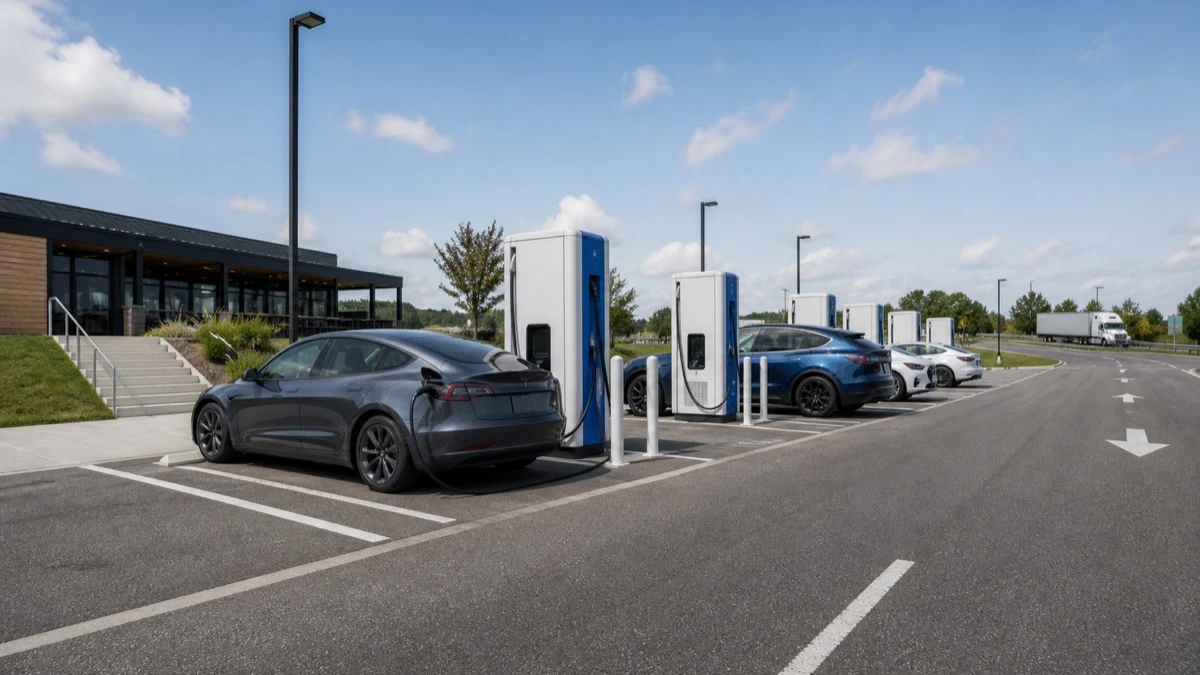
“Level 3” is a common name for DC fast charging. The charging equipment supplies direct current to the vehicle battery, while AC charging relies on the vehicle’s onboard charger to convert AC to DC.
The label does not specify a connector, a fixed power rating or a charging time. For a European project, compare the actual DC output, vehicle compatibility and local installation requirements. Three-phase AC charging is still AC charging.
Swipe or use the arrow keys to compare the columns.
| Decision | AC charging, often called Level 2 | DC fast charging, often called Level 3 |
|---|---|---|
| Power delivered to the vehicle | AC; converted by the onboard charger | DC; conversion takes place outside the vehicle |
| Typical planning use | Longer parking periods and scheduled charging | Shorter charging windows and quicker vehicle turnaround |
| Main limits to check | Vehicle AC acceptance and available site supply | Vehicle DC charging curve, charger output and available site power |
| Infrastructure review | Supply, protection, cabling and available capacity | Supply capacity, electrical equipment, civil work and operating requirements |
| Project approach | Can serve regular, longer-dwell charging | Can complement AC where faster replenishment is needed |
Match the charging method to the energy each vehicle needs during its available parking time. Some sites benefit from a mix of AC and DC charging.
Compare AC Charging OptionsCharging time depends on the energy the battery needs and the average power it accepts during the session. A charger’s rated output is a ceiling, not a promise that every vehicle will receive that power throughout charging.
Suppose a vehicle needs to add 40 kWh to its battery. The examples below assume a constant average power reaching the battery. They are arithmetic examples, not EV-TOP test results or predictions for a particular vehicle.
Swipe or use the arrow keys to compare the columns.
| Energy added to the battery | Assumed average power into the battery | Calculated charging time |
|---|---|---|
| 40 kWh | 50 kW | 48 minutes |
| 40 kWh | 100 kW | 24 minutes |
| 40 kWh | 150 kW | 16 minutes |
Real sessions include connection and start-up time, changing battery temperature and a charging curve that varies with state of charge. Grid energy also includes conversion losses and auxiliary consumption. Use the vehicle’s charging data and the proposed charger configuration for detailed planning.
DC acceptance, battery voltage, state of charge and temperature
Output at the vehicle’s voltage, current limits and thermal derating
Available power per output when several vehicles charge
Capacity allocated to charging after other site loads
Start with how vehicles use the site. The time available to charge and the number of vehicles arriving together matter as much as the charger’s headline power.
Plan around arrival peaks, bay turnover and the expected vehicle mix. Review public access, payment and available grid capacity early.
Discuss a Public Charging SiteUse return schedules, energy needed per shift and departure times to decide how AC and DC charging should work together.
Discuss Fleet ChargingCompare charging demand with actual parking time. A mix of AC and DC can serve visitors with different charging needs.
Discuss a Commercial SiteThe charger is one part of the budget. A useful estimate separates equipment from grid connection, installation and ongoing operation. Costs depend on the site and the selected configuration.
Request a Project QuoteUse expected charging sessions, energy sold, local tariffs and operating costs to build your business case. Include periods of low demand and planned maintenance. Charging revenue alone does not establish profit, and a higher power rating does not guarantee a shorter payback period.
Ask for an equipment quotation with a clear scope. Grid work, civil installation, commissioning, taxes and shipping should be identified separately wherever they are outside that scope.
List the vehicles, energy needed per visit, charging window and number of vehicles that must charge at the same time.
Confirm the supply with your electrical team or grid operator. Include other site loads and future expansion.
Match the vehicle’s connector, DC voltage and charging current. Request the power allocation for both single-vehicle and simultaneous charging.
Specify your backend, communication protocol requirements, user access and payment flow. Check compatibility for the exact hardware and software configuration.
Request the applicable technical documents, installation requirements, warranty terms, lead time and support arrangements for your market.
Compare these product families as a starting point, then confirm a configuration around your site and vehicles.
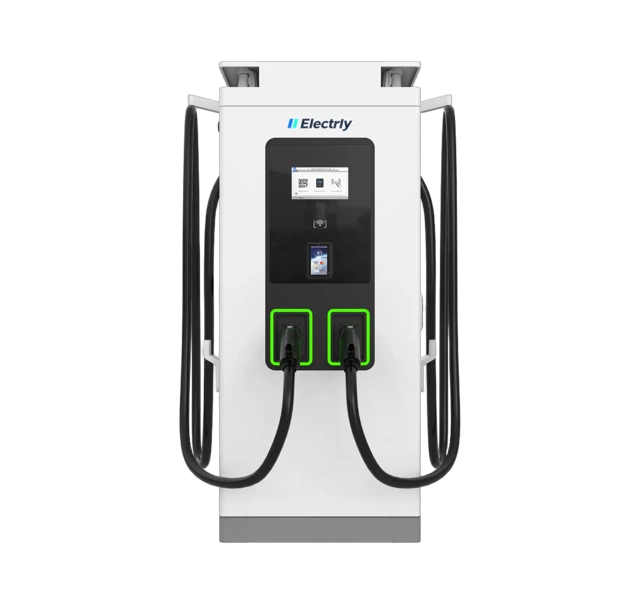
60–480 kW product-family range
Explore a DC charging configuration around your available power, vehicle mix and charging window.
Discuss Power Plus
60–240 kW product-family range
55-inch media display
Combine DC charging with an integrated display for on-site information and promotional content.
Discuss Power ADPower ranges describe the product families. Available configurations, output per vehicle and market-specific options must be confirmed for the project. Images show product examples; included equipment depends on the selected configuration.
Get Help Choosing a ChargerLevel 3 is a common name for DC fast charging. It describes the charging approach, not a particular connector or one fixed power level. Compare the actual equipment and vehicle specifications when choosing a system.
There is no single kW rating implied by the name. DC equipment comes in different power configurations. The EV-TOP families shown here cover 60–480 kW for Power Plus and 60–240 kW for Power AD. These are family ranges; confirm the available model and output configuration for your project.
DC charging at a residential site requires a suitable electrical supply, equipment and installation assessment. AC charging is usually the practical starting point when a vehicle can park for several hours. Discuss unusual high-energy or short-window needs with a qualified electrical professional before choosing equipment.
No. The vehicle’s DC acceptance, battery voltage, state of charge and temperature can limit charging power. Site capacity, charger limits and power sharing also matter. Use the expected average power during the charging window, not just the charger’s peak rating.
This depends on its output architecture and power allocation. Two cables do not prove that each vehicle can receive the charger’s full rated power at the same time. Request the simultaneous-output specification for the exact configuration.
Start by checking the vehicles’ DC charging ports and market requirements. CCS2 is a key consideration for European projects, but compatibility also depends on voltage, current and communication. Include the vehicle models and connector requirements in your enquiry.
Ask for a defined equipment configuration and a clear list of included items. Confirm shipping, taxes, grid work, installation, commissioning, software, payment services, warranty and maintenance separately where relevant. The agreed project quotation should state the scope.
Request the written terms and delivery estimate for your selected model, quantity and destination. Installation readiness and local project requirements should also be considered when setting the deployment schedule.
Share your location, vehicles and charging needs. Include any site-power information you have so the proposed configuration can be reviewed against your project.
Not sure about the technical details? Describe the project and share what you know.
Contact EV-TOPA useful starting point