 Residential
 Workplace
 Commercial
 Retail & Hospitality
 EV Chargers
 EV Adapter
 EV Accessories
 Home Charging
 Business charging
 Fast charging
Employees staying for the working day
Use longer parking periods to spread charging demand. Record typical arrival and departure times, daily energy needs and how many vehicles need to charge at the same time.

For employers, property teams and installers
Plan EV charging for employees who park for the working day, with additional options for visitors and company vehicles. EV-TOP supplies charging hardware and technical support for your project.
Your local installation team handles site works, electrical approvals and commissioning.
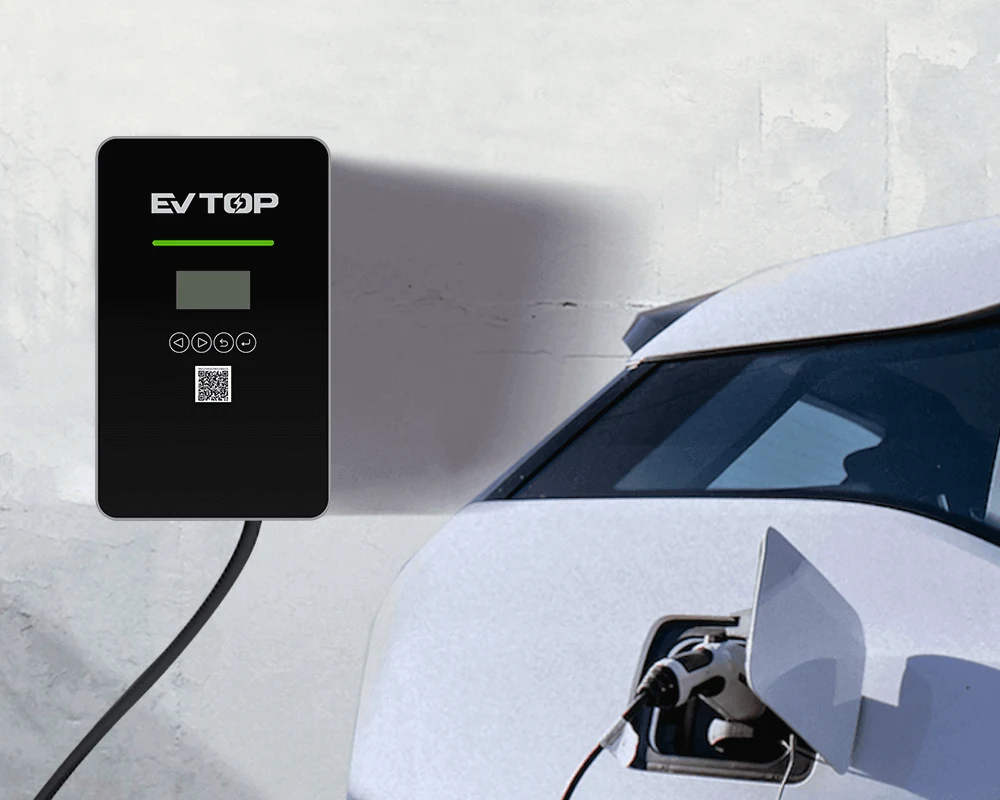
The right number of charging points depends on who uses the site, how long vehicles stay and how much energy they need before leaving. Start with current demand, then plan space and electrical routes for future expansion.
Use longer parking periods to spread charging demand. Record typical arrival and departure times, daily energy needs and how many vehicles need to charge at the same time.
Match charging to the visit length. Longer meetings may suit AC charging; shorter stays may justify a separate DC option after reviewing vehicle compatibility and site power.
Check when each vehicle must leave and the energy it needs for the next trip. Keep operational requirements separate from optional employee charging.
You can start with estimates. Your installer can help confirm the electrical details.
Review site power and expansionFor vehicles parked for several hours, AC charging is a practical starting point. Select the output to match the vehicle’s onboard charger and the power available at the site. Consider DC when the available parking time is too short for the required energy.
Type 2 configurations
A wall-mounted AC option to discuss for employee parking and shared office sites.
OCPP 1.6J is listed for the Type 2 configuration. Confirm the selected model, access options, firmware and backend connection before ordering.
Actual charging power is limited by the vehicle, electrical supply and site control settings.
If two adjacent bays need charging, ask about a dual-output AC configuration. Confirm output per vehicle, total supply requirements and the management options for the selected model.
Discuss Dual-Output ACCompact DC may suit vehicles that need more energy during a shorter stop. EV-TOP’s Compact DC category covers 20–80 kW; the available connector and output depend on the selected model.
Discuss a DC OptionCharging shares electrical capacity with the rest of the building. A load-management design can allocate the available charging power as other site loads change. It does not create extra grid capacity, and some sites will still need electrical upgrades.
Share the charger models, firmware, meters and management platform already on site. An OCPP connection alone does not confirm that every load-management function or third-party controller will work.
Review cable routes, distribution equipment, communications and space for additional bays with your installer. Agree how future chargers will be added to the same site power limit.
Decide who can charge, when they can use the bays and who pays for each session. Then confirm that the selected charger configuration and management platform can support those rules.
| User group | Decide before configuration | Confirm with the platform provider |
|---|---|---|
| Employees | Free or paid charging, access hours and rules for moving a charged vehicle | User access, session records and any charging fees |
| Visitors | Who may use the bays and whether access is restricted or open to the public | Guest access and any applicable payment process |
| Company vehicles | Required departure times, cost allocation and operational priorities | Vehicle or driver records, reporting and supported priority controls |
EV-TOP supports third-party CSMS integration, subject to compatibility checks for the selected hardware, firmware and platform. Accounts, tariffs, invoicing, reservations and ongoing platform services are provided by the chosen operator or software provider.
Discuss Access and BillingA workplace charging budget includes more than the chargers. Separate equipment supply, local installation and ongoing operation so that each part of the project has a clear owner.
| Budget item | What to include | Who confirms the scope |
|---|---|---|
| Charging equipment | Charger configuration, mounting accessories, required controllers and meters, shipping terms | EV-TOP and the purchasing team |
| Site works and electrical installation | Cable routes, distribution equipment, civil works, grid coordination and commissioning | Your local contractor or installer |
| Software and operation | Connectivity, platform fees, access policies, billing and site maintenance | Your platform provider and site operator |
Tell us the location, user groups, parking pattern, target quantities and any known power limits.
Confirm charger models, interfaces, control requirements and the documents needed by your local team.
Agree the final configuration, order quantity, delivery terms and any approved sample or integration tests.
EV-TOP supplies the agreed equipment and technical documents. Your local team completes site installation, approvals and commissioning.
EV-TOP provides installation documentation, spare-parts support and 5×8 remote technical support. On-site work, ongoing platform services and any enhanced service commitments are agreed separately.
Request Project DocumentsAC is a practical starting point when vehicles stay for several hours. DC may be useful for shorter visits or company vehicles with tighter turnaround times. Choose based on required energy, parking time, vehicle capability and available site power.
Start with the number of vehicles that need to charge at the same time, rather than the total number of employees. Review parking patterns, daily energy needs and expected growth with your installer. The number of charging points and the number of charger units may differ when dual-output equipment is used.
No. AC charging is also limited by the vehicle's onboard charger, the electrical supply and any site power limits. Confirm vehicle capability before selecting a higher output.
It can help allocate the capacity already available to charging, but it cannot guarantee that an upgrade will be unnecessary. Your local electrical team should review the site's demand, supply capacity and required charging service.
EV-TOP supports third-party CSMS integration. Compatibility must be checked for the selected charger, firmware, OCPP functions and platform. Existing chargers and third-party load controllers also need a separate compatibility review.
That can be a policy to plan for, but it must be supported by the selected access and billing system. Confirm user groups, tariffs and payment requirements with the platform provider. For projects in Germany, review the complete metering and billing arrangement before offering paid charging.
Access methods depend on the chosen charger configuration and backend. Ask us to review your preferred approach, such as RFID access or an app. Existing staff badges are not automatically compatible.
EV-TOP supplies equipment, technical documents and remote support. Local contractors or installers handle site works, permits, electrical connections and commissioning unless a separate project agreement states otherwise.
The standard MOQ for bulk orders is 100 units. Paid samples and project exceptions require approval. Standard hardware production is typically about one month after the purchase order, deposit and final configuration are confirmed. Shipping, site works and software customisation have separate schedules.
The standard warranty is 24 months from shipment or the bill-of-lading date. After remote diagnosis confirms a product quality issue, EV-TOP provides the applicable warranty spare parts. On-site labour, removal, reinstallation and logistics follow the contract terms. Standard technical support is remote, 5×8.
Share your site location, expected EV users, typical parking time and any power information you already have. We can discuss the equipment configuration and the documents your local installation team needs.
Estimates are welcome if your project is still at an early stage.