

EV-TOP Projects

EV Charging Projects by Market and Application

How EV-TOP runs a charging project, from your site details to factory after-sales, and the published projects in Europe, Asia-Pacific and China that show each step in practice. Find your application, follow the steps, then send us your site details.

For charge point operators, fleet operators, site owners, installers and integrators, and distributors.

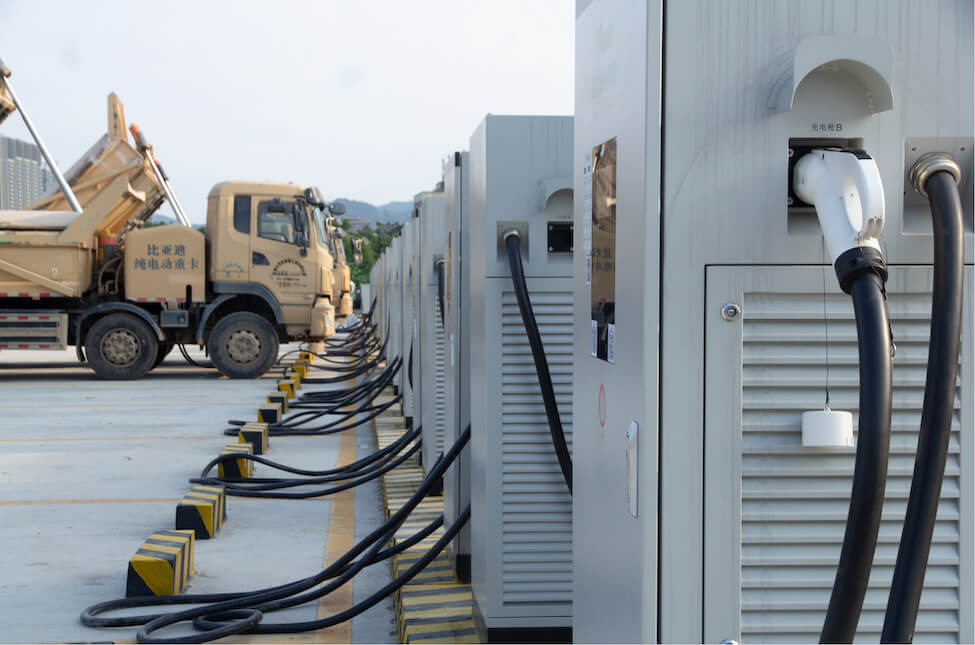
Row of DC charging cabinets beside a yellow truck at an outdoor station
16 yearsManufacturing EV chargers
120,000Chargers shipped
20+Countries served
21,000Units annual capacity
CEUL

Working together

How a Project Runs

What happens after you send the enquiry, what you provide and what EV-TOP delivers at each step. The same five steps apply to every application below.

Send Your Requirements

You provide
Site type, vehicles, how long they park, the electrical capacity available, and your target market.
We deliver
A reply within 24 hours from an engineer, not a sales script.

Confirm the Product Direction

You provide
The management platform you run, and the scope of any customisation.
We deliver
Product line and power, backend compatibility confirmed in writing, connector standards for your market.

Quote or Sample

You provide
Approval of the configuration, and of the design for OEM projects.
We deliver
A quotation against the confirmed configuration. For OEM projects, samples 2 weeks after design approval.

Production and Delivery

You provide
Order confirmation. OEM orders from 100 units.
We deliver
Reference lead time 30 days from order confirmation, shipping documents for your market, installation documents in the box.

Factory After-sales

You provide
Serial numbers and a description when something needs attention.
We deliver
2-year warranty, engineers reachable during commissioning, spare parts from the factory.
This covers equipment supply, customisation, documentation and after-sales. Scope for local installation, construction and permitting support to confirm.

For charge point operators

Public Charging Networks

The operating problem

  • A charger that is down is a bay that earns nothing.
  • Hardware has to survive the local climate for years, not one season.
  • The units must work with the management platform the operator already runs.

What these projects show

  • Norway: nearly 1,000 EV-TOP chargers in regular operation in Oslo and Bergen by July 2019, after two years of low temperature and high humidity.
  • Norway: EV-TOP chargers were among the few listed under an evaluation against the NEK 400 electrical standard.
  • Australia: 22 kW AC chargers supplied with an operation management system, a driver app and power balancing across the station.
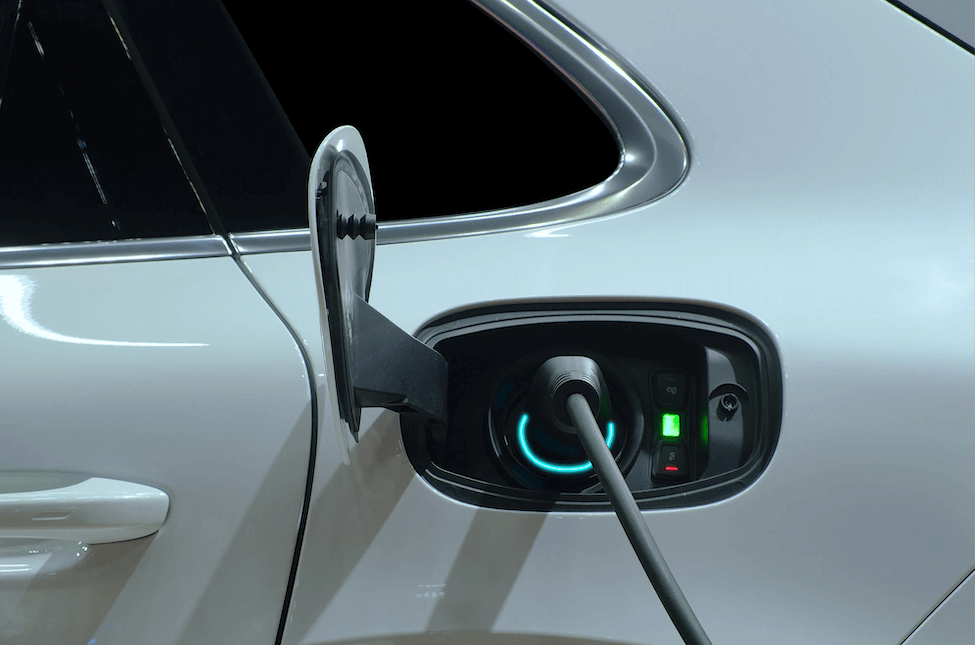
A typical public network projectTypical steps
  1. Site list and platformNumber of sites and bays, dwell time at each, and the OCPP platform you run.
  2. Compatibility before orderEngineers confirm interoperability with your platform in writing before you order.
  3. Charger mixAC 7–22 kW for long-stay bays, DC Fast 120–480 kW where stops are under an hour, load management where the connection is limited.
  4. OperationRemote diagnostics and OTA updates, spare parts from the factory, 2-year warranty.

For fleet operators and depot owners

Fleet and Heavy-Duty Charging Hubs

The operating problem

  • Trucks, buses and cars on one site need different voltages and power levels.
  • Vehicles must be charged before the next shift. Waiting time is lost transport capacity.
  • Site capacity is fixed. Adding chargers later must not mean rebuilding the site.

What this project shows

  • Shenzhen, 2020: 120 kW and 240 kW dual-connector DC chargers in a station of over 10,000 m² with 15,000 kVA installed capacity.
  • Constant-power charging modules keep output high across vehicle voltage levels, so dump trucks, buses and cars charge at the same station.
  • Charging compatibility tested with vehicle makers including BYD, Great Wall, BAIC and Nanjing Jinlong.
A typical fleet depot projectTypical steps
  1. Vehicle and shift dataVehicle types and batteries, return and departure times, grid capacity at the depot, and the expansion plan for two to three years.
  2. Power planCharger mix by dwell time. Split-System where the site will grow: the hub is installed once and dispensers added later.
  3. ProductionProduction against the confirmed configuration. Reference lead time 30 days from order confirmation.
  4. ExpansionAdd dispensers and power modules as the fleet grows, without redoing civil works.

For site owners and property operators

Destination and Visitor Parking

The operating problem

  • Visitors park for hours, so the number of bays and the cost per bay matter more than speed.
  • Equipment sits where visitors see it and must be simple for site staff to manage.
  • The site already runs a parking system. Charging should not become a second system to operate.

What this project shows

  • Hong Kong Disneyland, 2019: CE-certified 7 kW AC chargers chosen for long-stay visitor parking.
  • A charging management platform using OCPP, connected to the park’s parking management system for one-point operation.
  • The configuration was based on the park’s power-use pattern before the order was placed.
A typical visitor parking projectTypical steps
  1. Bays and dwell timeNumber of bays, how long visitors stay, and the parking system already in use.
  2. AC configurationAC 7–22 kW with an OCPP management platform, which can be linked to the site’s parking management system.
  3. AppearanceFor larger orders, logo and panel colours under the OEM scope, from 100 units.
  4. Installation and after-salesInstallation documents ship with the chargers. 2-year warranty with factory after-sales.

For installers and integrators

Solar-Integrated Charging

The operating problem

  • Chargers must connect to the photovoltaic and energy system already on the site.
  • The integrator carries the commissioning risk. Every extra site visit costs margin.
  • Grid rules and incentives differ by country, so the configuration has to be confirmed per site.

What this project shows

  • Spain, 2019: EV-TOP chargers connected to the partner’s photovoltaic system, so vehicles charge from on-site generation.
  • The partner is a photovoltaic company, not a charging specialist. The chargers had to fit its existing system.
  • Charger model, power and quantity to confirm
Product direction AC 7–22 kW V2G, AC and DC V2G power range to confirm
A typical solar site projectTypical steps
  1. System detailsThe PV and energy system on site, the grid rules for the country, vehicles and how long they park.
  2. Integration approachEngineers confirm how the chargers connect to the existing system. V2G on AC or DC as an option.
  3. Quote and productionQuotation against the confirmed configuration. Reference lead time 30 days from order confirmation.
  4. CommissioningInstallation and wiring documents for the crew, engineers reachable during commissioning, 2-year warranty.

For distributors, wholesalers and OEM buyers

Distribution and OEM Partnerships

The operating problem

  • A distributor’s own reputation depends on how the factory handles after-sales.
  • Entering a market usually starts with one simple model and grows into a full range.
  • Established brands need chargers built to their specification and branding, not a catalogue item.

What these projects show

  • Austria, 2019: customised AC and DC chargers built for an established charging-equipment company with its own brand and sales channels.
  • Malta, 2019: a local agent started with 7 kW AC chargers and extended to the full EV-TOP product line.
  • OEM terms today: MOQ 100 units, sampling 2 weeks from design approval, reference lead time 30 days, 2-year warranty handled by the factory.

Choose your market

Projects by Market

What has been proven where. Climate, local standards and partner type differ by market, so match on the market as well as the application.

Europe

4 projects · 2019
  • Two years of operation through Nordic winters, and listing under an NEK 400 evaluation in Norway.
  • Custom AC and DC chargers for a brand owner in Austria.
  • Chargers connected to a photovoltaic system in Spain.
  • A distributor’s market entry in Malta, from one 7 kW model to the full line.
ACCustom DC

Asia-Pacific

2 projects · 2019–2020
  • 22 kW AC operator network with a management system, driver app and power balancing in Australia.
  • CE-certified 7 kW AC with an OCPP platform linked to parking management at Hong Kong Disneyland.
AC 7 kWAC 22 kW

China

1 project · 2020
  • 120 kW and 240 kW DC chargers for trucks, buses and cars at a 15,000 kVA station.
  • Compatibility tested with BYD, Great Wall, BAIC and Nanjing Jinlong vehicles.
DC 120 kWDC 240 kW

North America and the Middle East

No project page published yet

EV-TOP ships to over 20 countries. Tell us your market and application and we will share the closest reference.

UL for North America

What partners receive

What Comes With Every Project

The same support applies whether the order is ten AC chargers or a DC station.

Installation documentation

  • Installation and wiring documents ship with the chargers.
  • Structures designed for fast mounting and wiring on site.

2-year warranty

  • After-sales handled by the factory support team.
  • Spare parts support for units in the field.

Engineers you can reach

  • Technical questions go to engineers, not only to a sales form.
  • Platform compatibility confirmed before the order for operators.

Your brand, or SKD kits

  • Logo and brand colours on the panel, custom packaging and manual.
  • Semi-knocked-down kits for local assembly, with documentation and training.

FAQ

Questions Buyers Ask About These Projects

Short answers. For anything site-specific, send the details and an engineer replies.

Do you have a project in my market?

Published projects cover Norway, Austria, Spain, Malta, Australia, Hong Kong and Shenzhen. EV-TOP ships to over 20 countries, so for other markets, including North America and the Middle East, tell us your market and application and we will share the closest reference.

Which projects used DC fast chargers?

The Shenzhen station uses 120 kW and 240 kW dual-connector DC chargers for trucks, buses and cars. The Austrian partner ordered customised DC as well as AC chargers. The other published projects used AC chargers of 7 kW to 22 kW.

Can I speak to a reference customer?

Reference contacts are shared where the customer has agreed, on request through the consultation form. Policy to confirm with EV-TOP sales.

What details do you need to match my site to a project?
  • Vehicle types and how long they stay.
  • Number of bays now, and in two years.
  • Available grid capacity at the site.
  • The management platform you run, if any, so compatibility can be confirmed before you order.
  • Target market, for certification and connector standards.
Can you build chargers under our brand, as in the Austria project?

Yes. OEM covers the logo and brand colours on the charger panel, custom packaging, and a user manual in your brand and language. MOQ is 100 units, sampling takes 2 weeks from design approval, and the reference lead time is 30 days from order confirmation.

How long does a project take?

Enquiries are answered within 24 hours. For OEM projects, samples are ready 2 weeks after design approval. The reference lead time for production is 30 days from order confirmation. Shipping time depends on the destination and is quoted with the order.

Do you install the chargers on site?

EV-TOP supplies the chargers, installation and wiring documents, and engineer support during commissioning. Installation is carried out by your installer. Scope for local installation, construction and permitting support to confirm.

Will you publish our project on this page?

Only with your written approval. Project details and photos are shared with customer approval, and a project can be listed by application and market without naming the customer.

Discuss your project

Have a Site Like One of These?

Send the vehicles, bays, grid capacity and platform. We reply within 24 hours with a configuration and a quote.