 Residential
 Workplace
 Commercial
 Retail & Hospitality
 EV Chargers
 EV Adapter
 EV Accessories
 Home Charging
 Business charging
 Fast charging
EV CHARGING TECHNOLOGY
EV Charging
Connector Types
Compare EV charging plugs by charging method and regional use. Start with the vehicle inlet, then check the charger configuration and project requirements.
Explore Type 1, Type 2, CCS1, CCS2, CHAdeMO, GB/T and NACS / SAE J3400.
Explore EV Charging
Connector Types
Use these guides to identify a connector family. Regional use is a starting point; confirm the inlet on the exact vehicle and the specification of the charging equipment.
Showing 8 connector types
Imported vehicles may use other connector types.
Imported vehicles and local specifications can change the connector mix. Check the vehicles used at your site.
Type 2
Typical contextEurope and selected other markets
Type 2 is used for AC charging. Check whether the charger has a socket or a tethered cable, and confirm the vehicle-side connection.
Type 2 AC and CCS2 DC are different connections.
CCS2 / Combo 2
Typical contextEurope and selected other markets
CCS2 is the Combo 2 connection used for DC charging. Its vehicle inlet combines a Type 2-shaped upper section with two additional DC contacts.
Confirm the vehicle's DC capability and the charger output specification.
Type 1 / SAE J1772
Typical contextNorth America, Japan and some imported vehicles
Type 1 is an AC charging interface. Identify the vehicle inlet and the required cable arrangement before specifying the equipment.
Type 1 AC is different from CCS1 DC.
CCS1 / Combo 1
Typical contextNorth America and selected other markets
CCS1 is the Combo 1 DC connection associated with a Type 1-shaped upper section and two additional DC contacts on the vehicle inlet.
CCS1 and CCS2 are different physical interfaces.
CHAdeMO Chargers and Connectors
Typical contextJapan and compatible vehicles in other markets
A CHAdeMO charger supplies DC power through a dedicated CHAdeMO connection. Confirm the vehicle model, model year and market version before selecting a charger.
Charging power and bidirectional operation depend on the vehicle and charger configuration.
GB/T AC
Typical contextChina-market vehicles and relevant imports
GB/T AC is a separate AC charging interface. Match the vehicle and equipment to the applicable GB/T specification.
Do not treat GB/T AC as a Type 2 connection.
GB/T DC
Typical contextChina-market vehicles and relevant imports
GB/T DC uses a separate DC connection and charging communication requirements. Confirm the interface generation and vehicle specification.
GB/T AC, GB/T DC and ChaoJi are not interchangeable names.
NACS / SAE J3400
Typical contextNorth America
SAE J3400 standardizes the North American charging system based on NACS. The connection can be used for AC or DC charging with suitable equipment and vehicles.
Connector shape alone does not guarantee vehicle or charging-network access.
No matching connector types
No connector types match these filters. Reset the filters or share your vehicle details for a configuration review.
This is a connector guide. EV-TOP charger configurations are reviewed by model and destination market.
What else affects compatibility?A Matching Plug Is
Only the First Check
A connector describes the physical connection. A charging system also depends on electrical limits, communication and the functions implemented by the vehicle and charger.
Connector and vehicle inlet
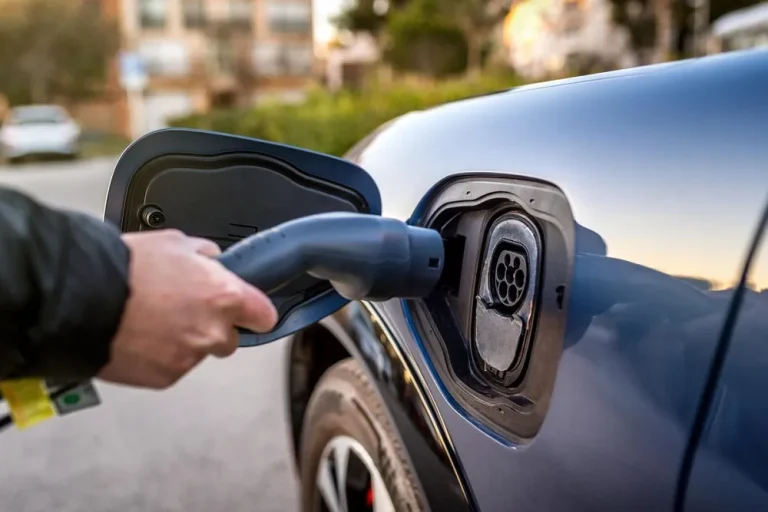
The charging connector mates with the vehicle inlet. A socket on the charger is a different connection point and may require a separate cable.
Type 2 and CCS2
Type 2 is used for AC charging. A CCS2 vehicle inlet adds DC contacts below the Type 2-shaped section. Check which charging functions the vehicle actually supports.
Vehicle communication and OCPP
Vehicle-to-charger communication and charger-to-management-system communication serve different roles. OCPP support does not make different vehicle connectors interchangeable.
Power and additional functions
Charging power, Plug & Charge, V2G and load management need their own compatibility checks. None is guaranteed by the connector name alone.
Choose the Connector Around
Your Vehicles and Site
- 01
Identify the exact vehicles
List the make, model, model year, market version and charging inlet. Include clear inlet photos if the connector is uncertain.
- 02
Confirm AC or DC charging
Check the vehicle's charging capability, charging window and required energy. Do not select a charger from the connector name alone.
- 03
Define the site and market
Tell us where the equipment will be installed and whether the site is publicly accessible or restricted to a defined fleet.
- 04
Check outputs and simultaneous use
Specify how many vehicles must charge at the same time. Multiple connectors on one cabinet do not necessarily mean simultaneous charging.
- 05
Confirm the configuration and documents
Review the proposed model, interface, electrical limits, communication, local requirements and installation documents before ordering.
For North American fleets, check the mix of J1772, CCS1 and NACS / SAE J3400 vehicles. For China-market vehicles, distinguish GB/T AC from GB/T DC. For Japanese and imported vehicles, identify the actual inlet rather than relying on the country of origin.
Review My Connector RequirementsWhen the Charger and Vehicle Connections Differ
Some charging combinations can use an approved cable or adapter. Suitability depends on the exact charger, vehicle, direction of connection, charging method and electrical and communication requirements.
Describe the connection as:
Charging equipment connector → vehicle inletExample to assess: CCS2 charging equipment → a CHAdeMO vehicle inlet. Naming both ends defines the question; it does not confirm that an adapter is approved or compatible.
Before Specifying an Adapter
- Identify both ends and the direction of use.
- Confirm AC or DC operation and the required voltage and current.
- Check communication, locking, temperature protection and manufacturer instructions.
- Verify the exact vehicle, charger and adapter versions together.
- Check applicable approval requirements and charging-network rules.
A passive adapter does not convert an AC charging supply into a DC fast charger.
Review an Adapter RequirementCompare Connectors and
Explore Charger Options
CCS1 vs CCS2
Compare the two CCS interfaces and the vehicle and market checks needed for a project.
Read the ComparisonCCS vs CHAdeMO
Review the differences between these DC charging systems and the limits of connector-only comparisons.
Read the ComparisonEV-TOP Charger Options
Explore our charger range, then request a configuration review for your vehicles and destination market.
Explore EV ChargersModel-Specific Documents
Request the relevant datasheet, installation information and market documents after the proposed configuration has been identified.
Request Technical DocumentsConnector options are confirmed for the selected model. Not every power rating, connector combination or simultaneous-output arrangement is available on every charger.
EV Charging
Connector FAQs
What are the main EV charging connector types?
This guide covers Type 1, Type 2, CCS1, CCS2, CHAdeMO, separate GB/T AC and DC interfaces, and NACS / SAE J3400. The relevant choice depends on the vehicle, charging method and market.
Are Type 2 and CCS2 the same?
No. Type 2 is an AC connection. A CCS2 vehicle inlet includes an upper Type 2-shaped section and additional DC contacts. Confirm the AC and DC charging functions supported by the specific vehicle.
What is the difference between CCS1 and CCS2?
CCS1 and CCS2 are different physical DC interfaces within the CCS family. Their vehicle inlets use upper sections associated with Type 1 and Type 2 respectively. Check the exact vehicle inlet rather than selecting by the CCS name alone.
Which vehicles can use a CHAdeMO charger?
A vehicle must have a compatible CHAdeMO inlet and support the relevant charging system. Confirm its model year and market version; a brand or model name alone is not enough. Share the vehicle details and inlet photos if you are unsure.
Are GB/T AC and GB/T DC interchangeable?
No. They are separate interfaces for different charging methods. Confirm the applicable connector and communication specifications for the exact vehicle and charger. Do not treat ChaoJi as another name for either existing interface.
Can NACS / SAE J3400 be used for both AC and DC charging?
The connection supports AC or DC applications with suitable vehicles and equipment. That does not mean every charger provides both, or that every vehicle can access every charging network. Check the vehicle, equipment and network requirements.
Can an adapter make any charger work with any vehicle?
No. Assess the exact equipment-to-vehicle direction, electrical ratings, communication, manufacturer instructions and local requirements. An adapter name or a physical fit is not a compatibility guarantee.
Does a matching connector guarantee OCPP, V2G or load-balancing compatibility?
No. These functions require separate checks of the charger, vehicle, firmware, management system and site configuration as applicable. Tell EV-TOP about any existing third-party equipment before a configuration is proposed.
Need the Right Connector
for Your Project?
Share the project country, vehicle details, AC or DC requirements, connector types and the number of vehicles that need to charge at the same time. EV-TOP can review the equipment configuration with your team.
Have an existing charger or a mixed fleet? Include the model details and describe the connection you need.
Review My Connector RequirementsLocal installation, permits, grid connection and site acceptance remain with the responsible project parties unless separately agreed.